
This is a test article; real content will replace it. On a fast-charging site the biggest line item is rarely the hardware - it is the grid connection. The moment the combined output of the chargers exceeds the reserved capacity, you are in for a negotiation with the distribution operator, an assessment and often a substation of your own.
Peak demand and average demand are not the same thing
A charging site draws power in bursts. The connection, however, is not sized for the average but for the peak - the moment when the largest number of cars is plugged in at once. For most of the day that expensive capacity sits idle.
Reinforcing the connection is therefore an investment into a few minutes a day. You pay for capacity that is barely used, plus higher capacity charges for as long as the site runs.
What a microgrid changes
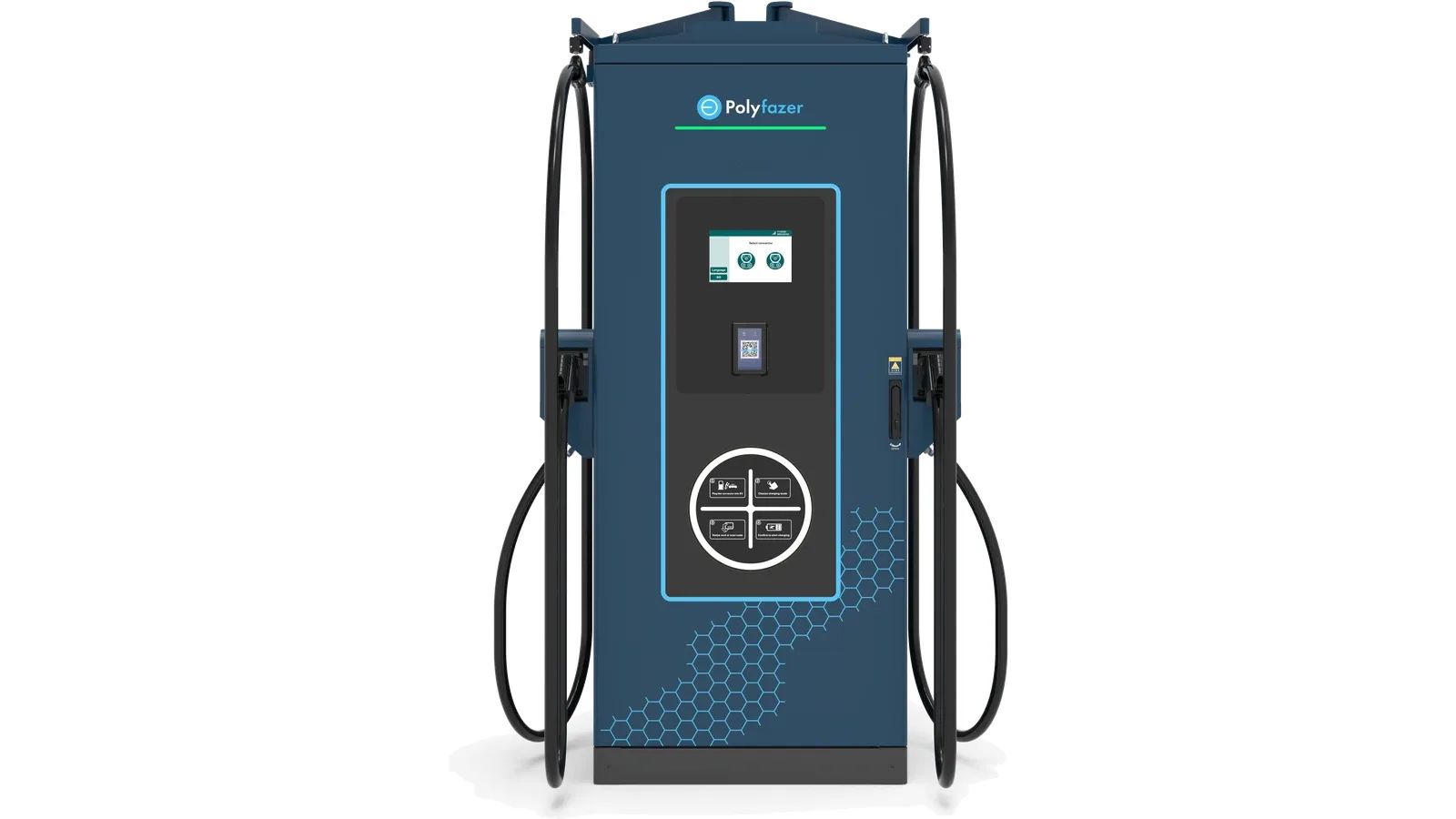
The Polyfazer Energy Hub combines the grid connection, photovoltaics and battery storage on the DC side, with no needless conversions. The roles are simple:
- The grid connection covers the average load of the whole site.
- Battery storage supplies the gap between the average and the peak.
- Photovoltaics charge the battery directly on the DC side.
The result is up to 800 kW available at the chargers on a 100 kW grid connection - eight times its rating.
A hundred kilowatts from the grid, up to eight hundred at the charger. A thicker cable will not bridge that gap; a battery will.
When it pays off
- The distribution operator will not raise the reserved capacity, or not for years.
- Peak demand is already driving up your capacity charges.
- The site has its own photovoltaics whose output does not coincide with charging peaks.
The battery is not idle outside the peak either. Between peaks it can be used for energy arbitrage and for the site's own consumption, so it contributes to the bottom line even on quiet days.
The wiring and the full capability of the hub are described on the BESS and DC-DC microgrid page.